



How an Air Conditioning System Keeps a Home or Business Nice and Cool
Nearly every home in America has an air conditioner of some kind. Some are ductless mini-split systems or window-mounted units that are installed on a room-by-room basis. But most are central air systems, with every room being served by a single large unit connected to a series of air ducts.
Regardless of the type of system, however, every AC shares the same purpose - cooling and dehumidifying an indoor space. Every type of air conditioner accomplishes this in much the same way. As summertime creeps ever closer, it can be helpful (and comforting) to know just how that air conditioner does its thing and keeps the sweltering heat at bay.
Air Conditioner Design
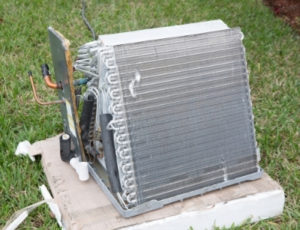
There are a few main components to every air conditioner - a thermostat, a compressor, a condenser, an evaporator, blower fans, and copper pipes filled with refrigerant. In central air and mini-split systems, these components are divided into two separate units, one inside and one outside.
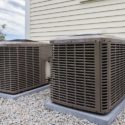
The outdoor unit houses the compressor, the condenser, and a blower fan, while the indoor unit houses the evaporator and a blower fan of its own. The units are connected by the copper refrigerant lines and electrical wiring. The thermostat is typically located on a wall or on the indoor unit itself, depending on the system. With window-mounted air conditioners, every component is contained in one unit.
How an AC Works
Now, look at how all of these components work together to provide cold air to a given space. The compressor pumps the liquid refrigerant through an expansion valve (which regulates the flow rate) and on into the evaporator, where it gets converted in gaseous form - a process that makes it extremely cold.
As the gaseous refrigerant flows through the copper evaporator coils, the indoor fan sucks warm indoor air through the air filter and blows it over the coils. The cold refrigerant absorbs the air’s heat energy, and the now-chilled air is blown back into the house. At the same time, the air’s moisture content collects as condensation on the evaporator coils, dehumidifying the home to some extent.
The refrigerant then flows into the condenser coils, where it is converted back to a liquid state as another fan blows outdoor air across the coils, carrying off the heat collected from the indoor air. The cycle then repeats until the thermostat sensors read the desired temperature.

Why AC Service Professionals Are Important
Understanding even this rudimentary description of how an air conditioner works, it’s easy to see how a problem with any one component can affect the whole system. And an AC system’s complexity goes well beyond the key elements mentioned here. That’s why HVAC technicians need to be well-versed in all technologies, new and old. They must also be highly trained to properly work on these complex systems, especially since chemical refrigerants and electrical components can be dangerous if mishandled.
So for anyone experiencing AC trouble (or wanting to make sure their system is in good working order), it’s best to leave the maintenance and repairs to the pros.
About Chris Wilson Plumbing & Heating Repairs Inc
The family-owned Chris Wilson Plumbing & Heating Repairs Inc has been serving Monterey, CA with pride for over 35 years. Their friendly expert technicians are always respectful, courteous, and punctual. They offer competitive pricing, financing, membership plans, and 24/7 emergency service.

